
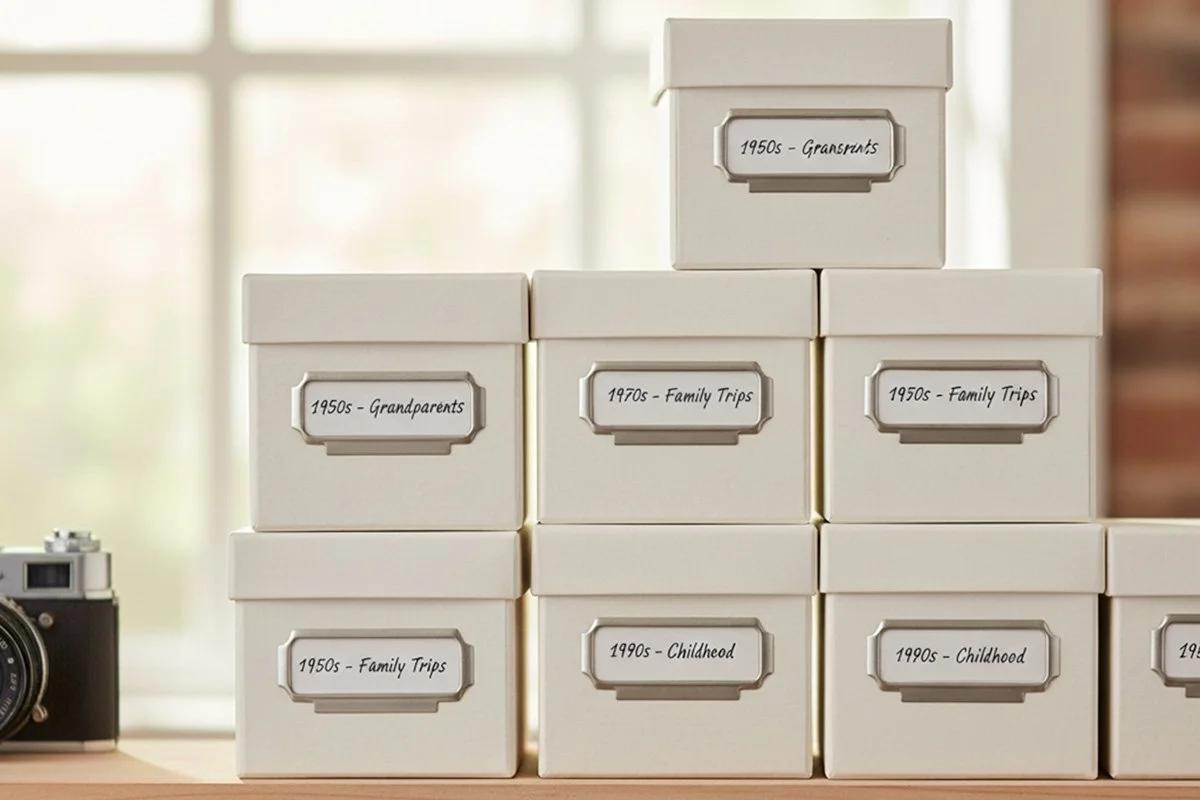
1. Why safe photo storage matters
Most photo damage starts quietly. A photograph may sit for years in an attic, garage, envelope, old album or cardboard box before fading, staining, warping or surface damage becomes obvious.
Safe storage helps protect the original photograph while also making future scanning, restoration and family archive work easier.
2. Basic rules for storing old photos
You do not need a museum archive to protect family photographs properly. Start with a clean, dry, stable storage spaces and avoid materials that may react with the photographs over time.
- Keep photographs clean, dry and away from direct sunlight.
- Handle prints by the edges wherever possible.
- Support fragile photographs fully when lifting or moving them.
- Separate loose prints from albums, paperwork and mixed family items where practical.
- Avoid stacking heavy items on top of fragile photographs.
- Do not store originals near radiators, windows, damp walls, garages or loft extremes.
3. Choosing safe storage materials
Photographs should ideally be stored in archival-quality sleeves, folders or boxes. Look for materials described as acid-free and lignin-free.
Ordinary envelopes, cheap plastic wallets, sticky albums and acidic cardboard can contribute to staining, sticking, fading and long-term deterioration.
| Use | Avoid |
|---|---|
| Acid-free sleeves or folders | Ordinary paper envelopes |
| Archival photo boxes | Old shoe boxes or acidic cardboard |
| Clean, dry storage spaces | Garages, sheds, damp cupboards or loft extremes |
| Soft pencil or separate archival labels | Sticky labels, tape or ink directly on photographs |
4. The best environment for old photos
Photographs last longer in stable conditions. The key risks are heat, damp, sunlight and rapid changes in temperature or humidity.
- Choose a cool, dry, interior room where conditions stay reasonably stable.
- Keep photographs away from direct sunlight and strong artificial light.
- Avoid damp areas where mould or mildew could develop.
- Do not store photographs against exterior walls where condensation may occur.
- Keep food, drink, chemicals and cleaning products away from storage areas.
5. Common storage mistakes
Many old photographs are damaged not by age alone, but by poor storage decisions made years earlier. The biggest risks are usually avoidable.
- Leaving photographs loose in mixed family boxes.
- Keeping photos in old magnetic albums with sticky pages.
- Writing directly on the photograph.
- Using tape, glue or adhesive labels.
- Storing damp or water-damaged photographs before they are stable.
- Forcing curled or stuck photographs flat.
6. Labelling and documenting family photos
Labelling matters because unidentified photographs lose meaning over time. But the label should never damage the item itself.
Keep names, dates, places and notes on separate paper, archival labels or a digital inventory. If writing on a storage folder or sleeve, make sure the ink cannot transfer onto the photograph.
- Group photographs by family, event, place or collection.
- Use simple reference numbers if you have a large archive.
- Record known names, dates and stories separately.
- Keep condition notes for damaged or fragile photographs.
- Match digital scans to the physical originals using consistent names.
7. Do not forget digital storage
Safe storage is not only physical. Once photographs are scanned, the digital files also need a simple structure and a reliable backup routine.
- Keep original scans separate from edited or restored versions.
- Use clear file names rather than random camera or scanner names.
- Back up files to more than one location.
- Keep one copy away from the main computer if possible.
- Review backups occasionally to make sure they still open.
Related Preservation Guides
Continue protecting your photo collection
Safe storage is one part of a wider preservation process. These related guides explain how to prepare, scan and manage old photographs more safely.
Printable Resource
Prefer a structured preservation reference?
The Past2Perfect Archival Storage Guide expands on the principles above with practical storage procedures, documentation guidance, environmental standards and preservation workflows designed for family photograph collections.
View the Archival Storage Guide8. When to get help
If photographs are mouldy, stuck together, brittle, curled, water damaged or attached to old album pages, do not force them apart or attempt aggressive cleaning.
Send a clear phone photo first. I can usually advise whether the item should be scanned, stabilised, restored or stored differently.
Ask for advice