01
Assessment & Planning
The collection is reviewed to understand its size, condition, priorities, risks and long-term objectives.
Archive Support
Practical hands-on support for private clients, collectors, local history groups and heritage organisations who need photographic collections assessed, organised, scanned, restored and preserved.
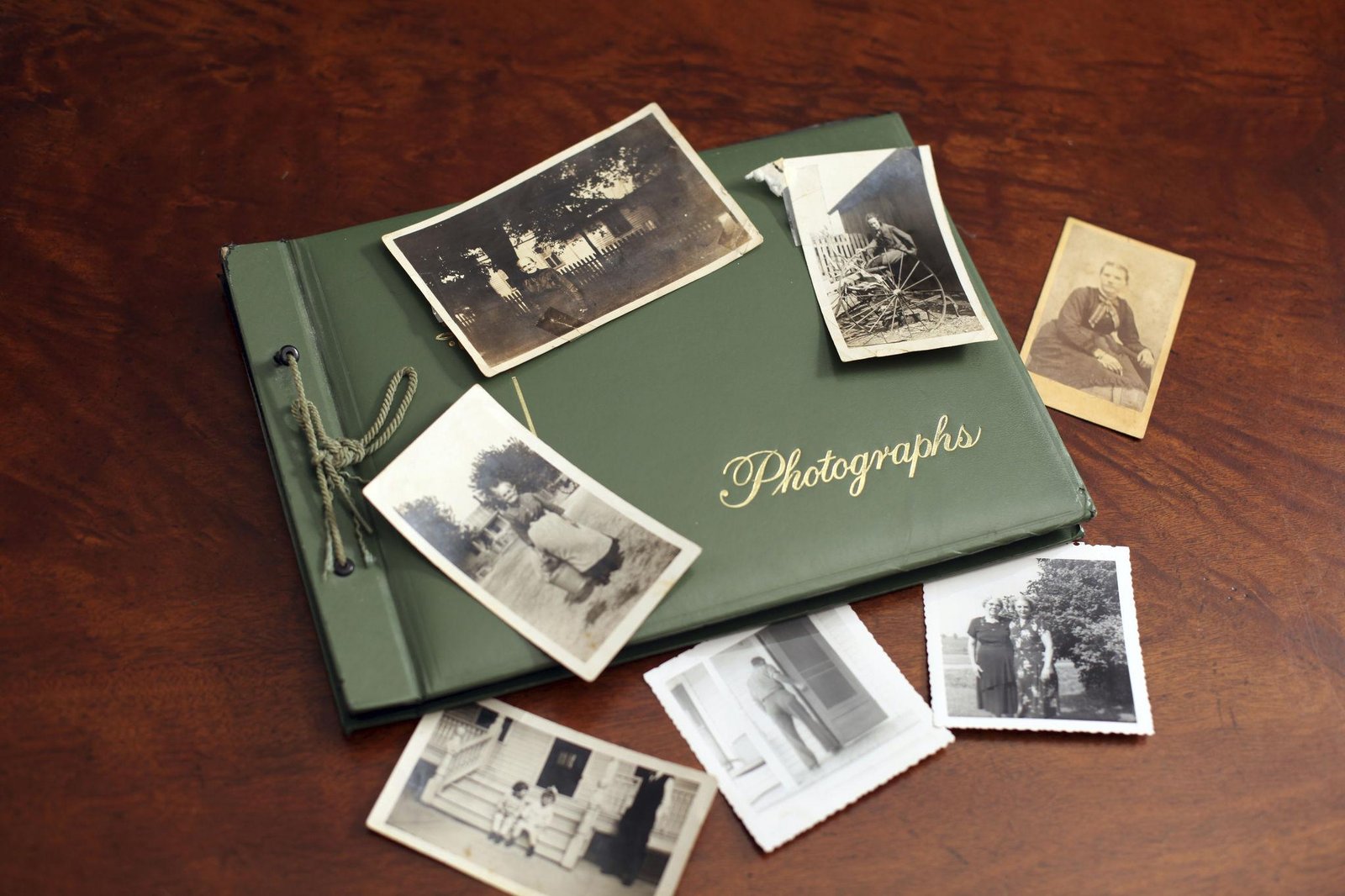
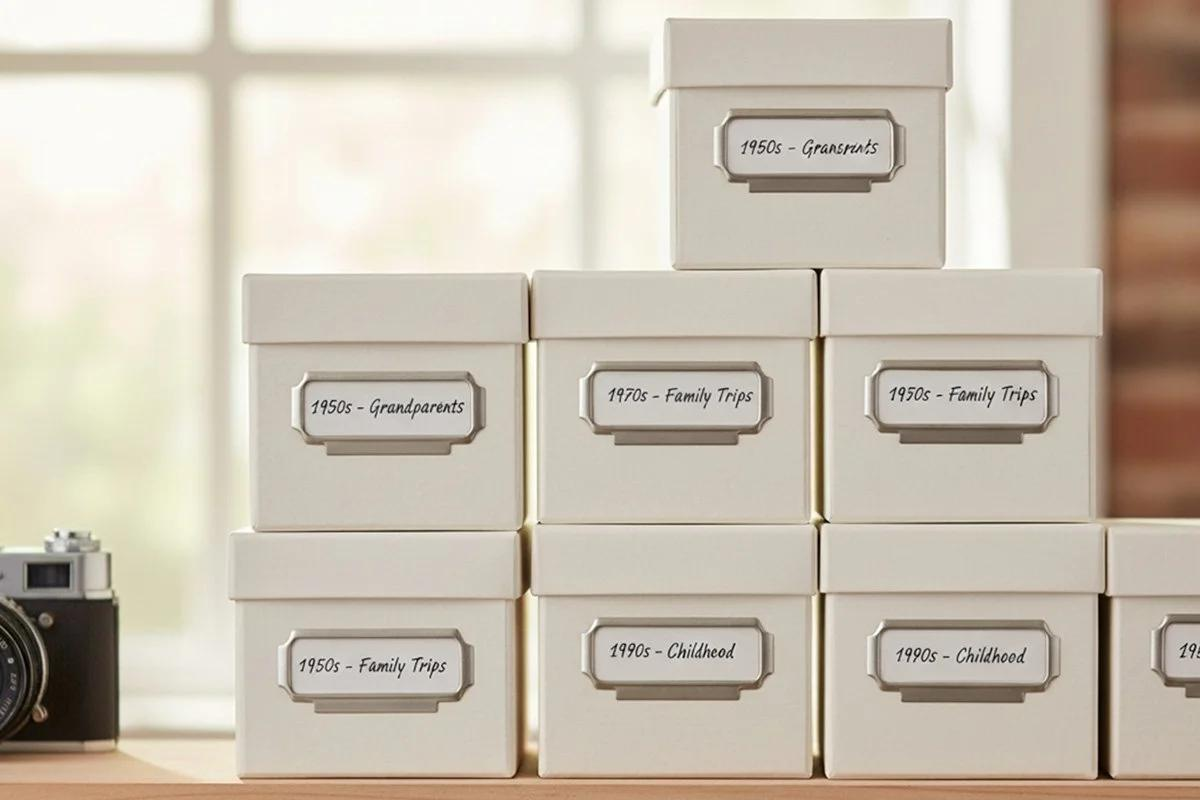
Many photograph collections begin as albums, boxes, envelopes, drawers or digital folders accumulated over decades. What starts as a collection can quickly become difficult to navigate, particularly when names, dates, locations and family stories are not recorded consistently.
Photographic archive organisation creates structure around those materials. Through assessment, organisation, digitisation and preservation planning, collections become easier to access, manage, share and protect for future generations.
Photographic archives often require more than storage alone. Collections may need sorting, identification, digitisation, restoration prioritisation, preservation planning and long-term management systems. These services are designed to help transform collections from difficult-to-manage groups of photographs into organised, accessible and better protected archives.
Review of the collection, condition, risks, priorities and preservation needs.
Sorting, structuring, labelling and preparing photographic material for easier access and long-term care.
High-quality scanning of prints, negatives, slides and suitable photographic material, with sensible file naming and digital organisation.
Careful restoration of damaged images, plus guidance or support for protecting originals and digital files.
Resource
The Family Photo Organisation System provides a practical framework for organising, sorting and managing photographic collections.
Explore the Family Photo Organisation System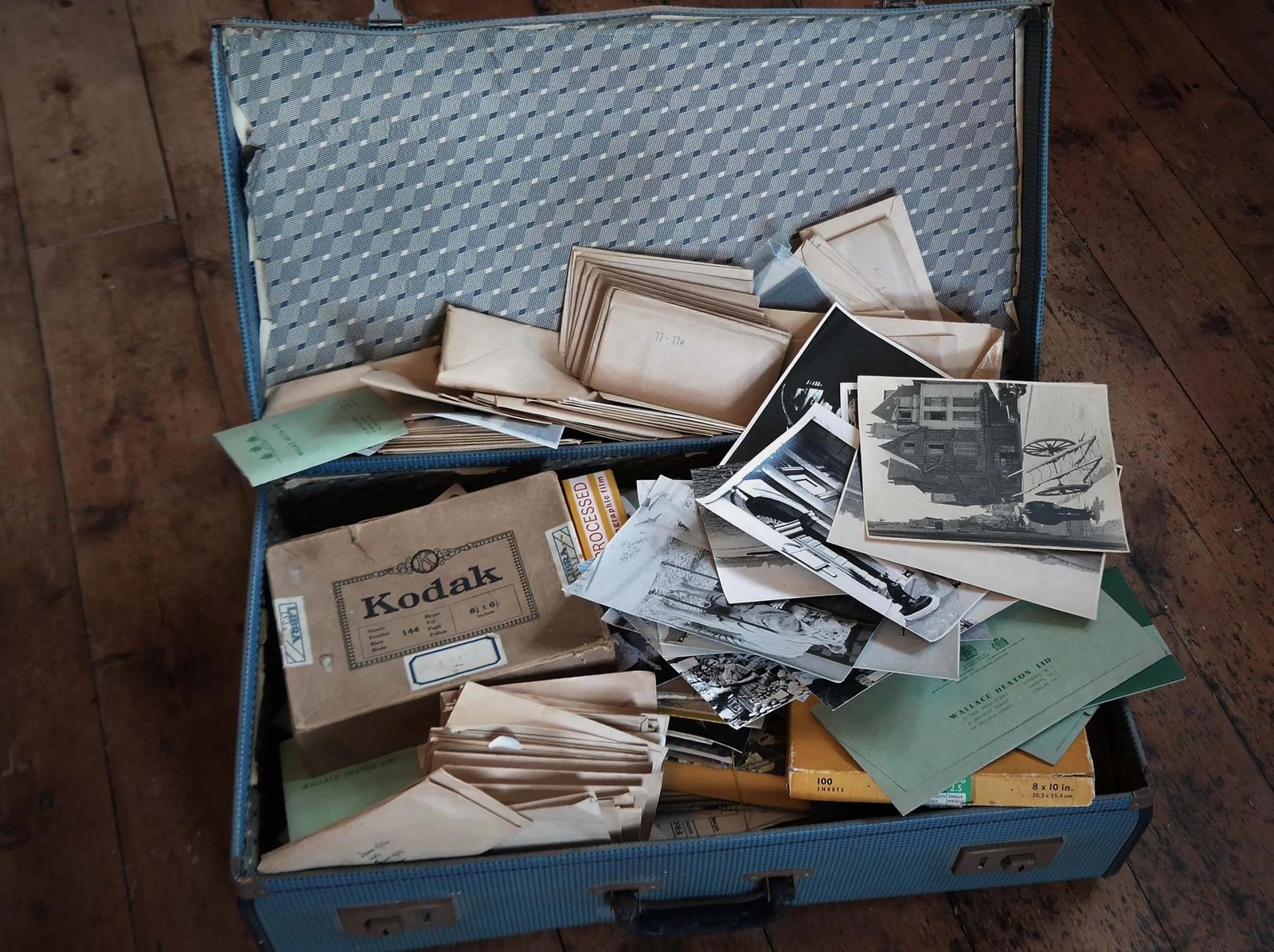
Not sure where to begin with an inherited collection?
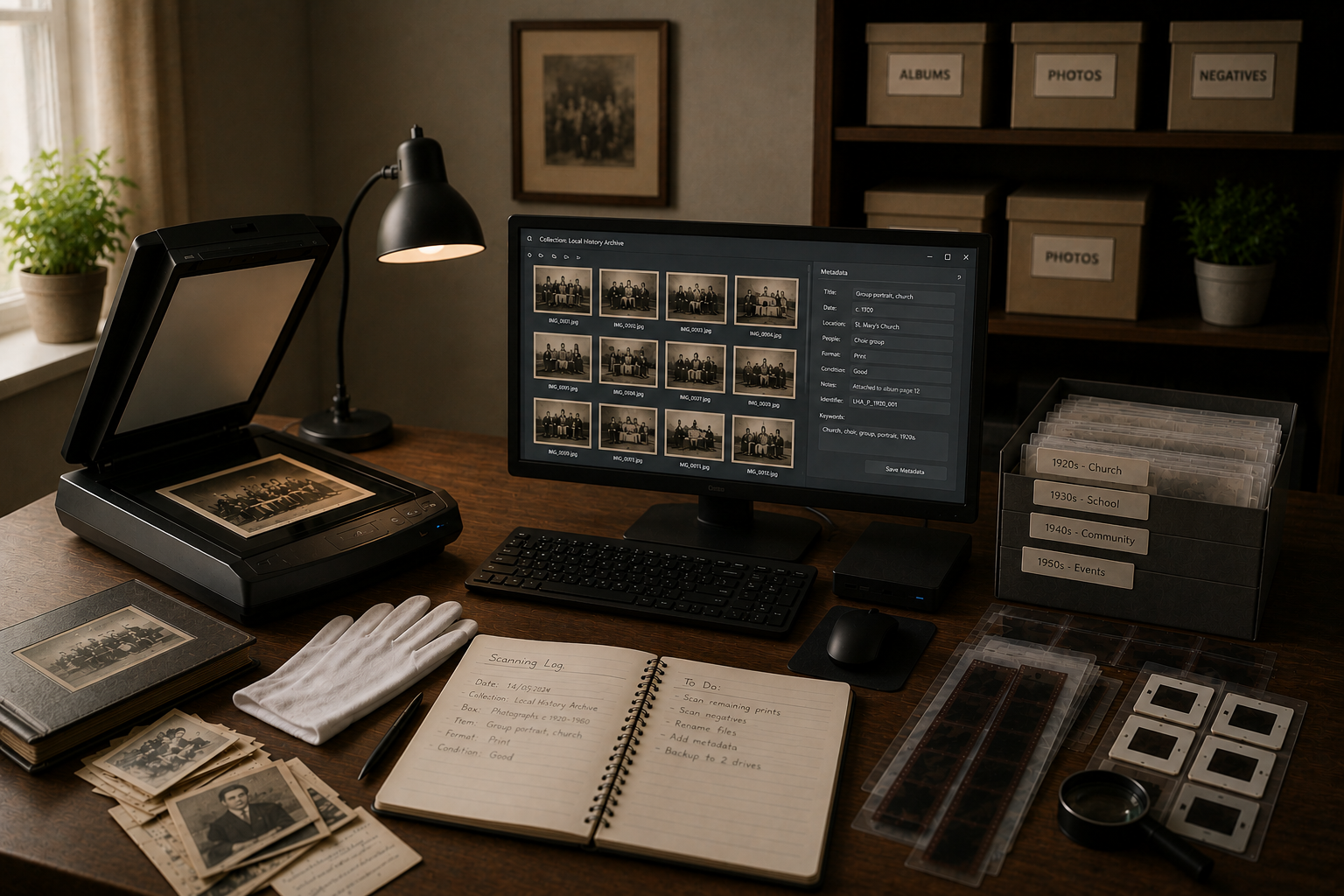
The goal of archive organisation is not simply to store photographs. The goal is to create a collection that remains understandable, accessible and manageable over time.
An organised archive makes it easier to locate photographs, preserve important information, plan digitisation projects and identify material that may benefit from restoration or further research.
Whether the collection belongs to a family, collector, local history group or heritage organisation, good organisation creates a stronger foundation for long-term preservation and future access.
The collection is reviewed to understand its size, condition, priorities, risks and long-term objectives.
Photographs are structured logically, information is retained where possible and digitisation priorities are established.
Storage, preservation, restoration priorities and future access requirements are considered to support long-term use.

Indicative Pricing
Every collection is different. The prices below are intended as a guide and help illustrate the types of support available.
| Service | From |
|---|---|
| Archive Consultation | £95 |
| Collection Assessment | £125 |
| Archive Organisation & Planning | From £295 |
| Digitisation Projects | Quoted Individually |
| Heritage & Community Collections | Custom Quote |
| Preservation Materials | Additional Cost |
| Large Collections (1000+ photos) | Project Quote |
Larger collections, archive projects and heritage work are quoted individually based on size, complexity and project requirements.
EXPERIENCE
Photographs rarely lose their value because of physical damage alone. More often, collections lose value when information becomes separated from the images themselves.
Names, dates, locations and family connections can quickly disappear when collections lack structure. Once that information is lost, it can be difficult or impossible to recover.
Archive organisation helps preserve both the photographs and the knowledge connected to them. A well-structured archive allows future generations to understand not only what the photographs show, but why they matter.
Whether the collection contains hundreds or thousands of photographs, good organisation improves accessibility, supports preservation and helps ensure important stories remain connected to the images that tell them.
Next Step
Send a brief description of the collection, its size and what you are trying to achieve. Past2Perfect can help you assess the next practical step.
Discuss an Archive Project